Best Things to Do in Kraków (2026 Guide): What’s Actually Worth Your Time
Excerpt Insight: Planning a Kraków city break? Discover the best things to do in Kraków, what attractions cost, how long they take and which sights are actually worth prioritising.
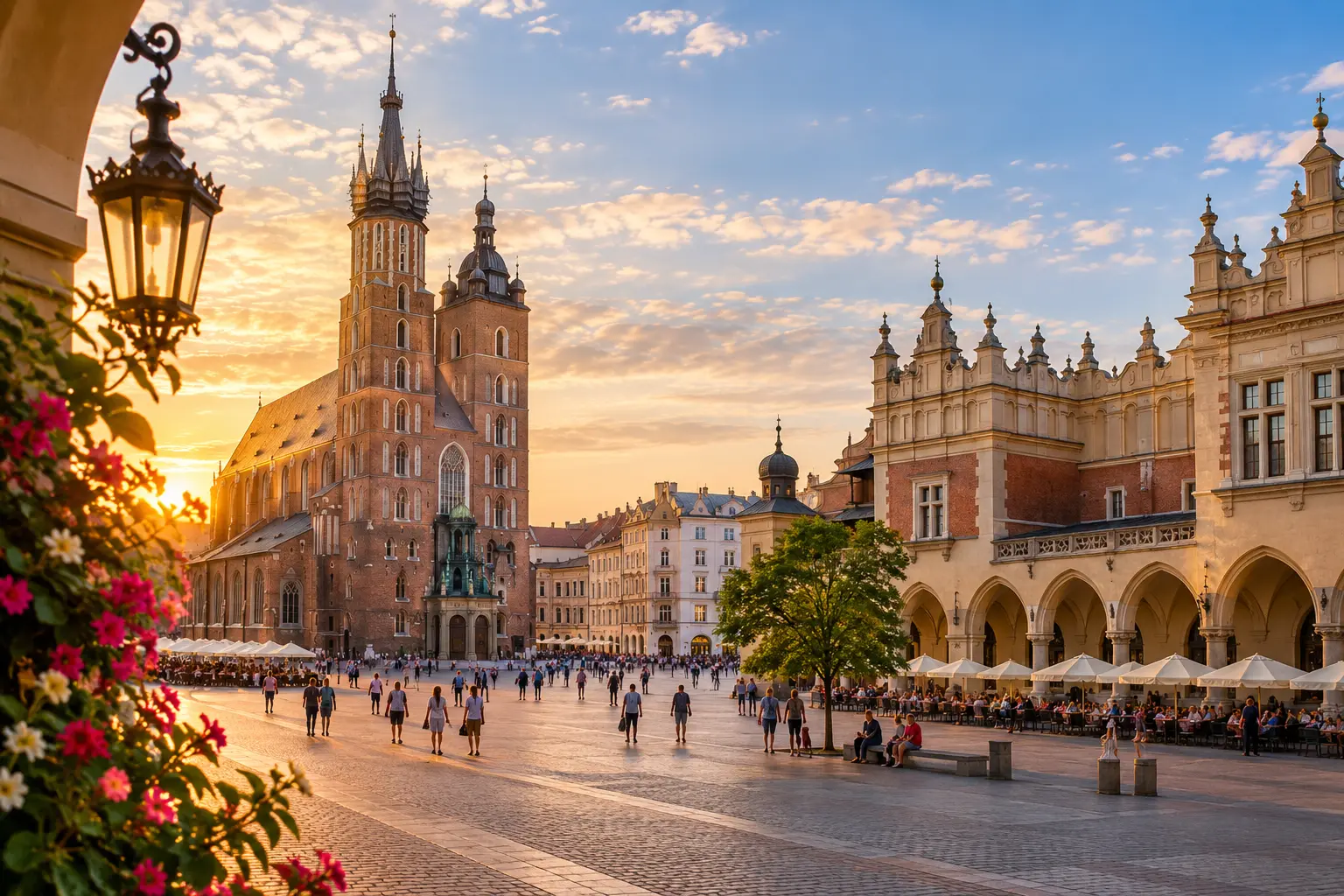
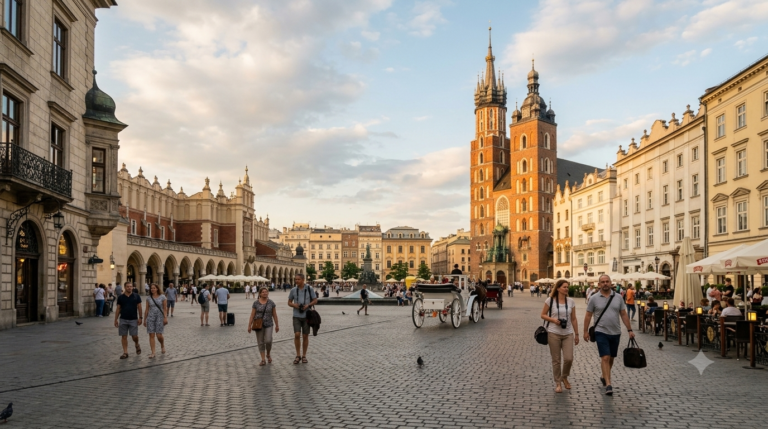
Kraków is one of those cities where you can see a surprising amount without spending half your trip on public transport. The historic centre is compact, Wawel Castle sits within walking distance of the Main Market Square, and Kazimierz is only a short walk further south.
That makes Kraków particularly well suited to a 2–4 night city break from the UK. The challenge isn’t finding things to do. It’s deciding which attractions are actually worth giving your limited time to.
Some of Kraków’s best experiences cost nothing. Others require timed tickets, advance booking or several hours to appreciate properly. And at places such as Wawel, simply buying every available ticket isn’t necessarily the best way to visit.
This guide focuses on the best things to do in Kraków on a first trip, including what they cost, how much time to allow and what you should know before booking.
Still organising the rest of your trip? Read our Kraków City Break Guide for UK Travellers for help with flights, accommodation, transport, spending money and the practical side of planning your stay.
What should you prioritise in Kraków?
On a three-night break, resist the temptation to tick off every attraction. Give the Old Town proper time, spend another substantial part of a day around Wawel and Kazimierz, then choose one major museum or historical attraction that genuinely interests you.
1. Start at Main Market Square (Rynek Główny)
Main Market Square is the natural starting point for a first visit to Kraków. It places you immediately in the historic heart of the city, surrounded by some of its best-known architecture.
The vast medieval square contains the Cloth Hall, St Mary’s Basilica and Town Hall Tower, while the surrounding streets lead deeper into Kraków’s Old Town.
You don’t need a complicated sightseeing plan here. Walk the square, explore the surrounding lanes and give yourself enough time to notice the architecture rather than treating it simply as the route to your next attraction.
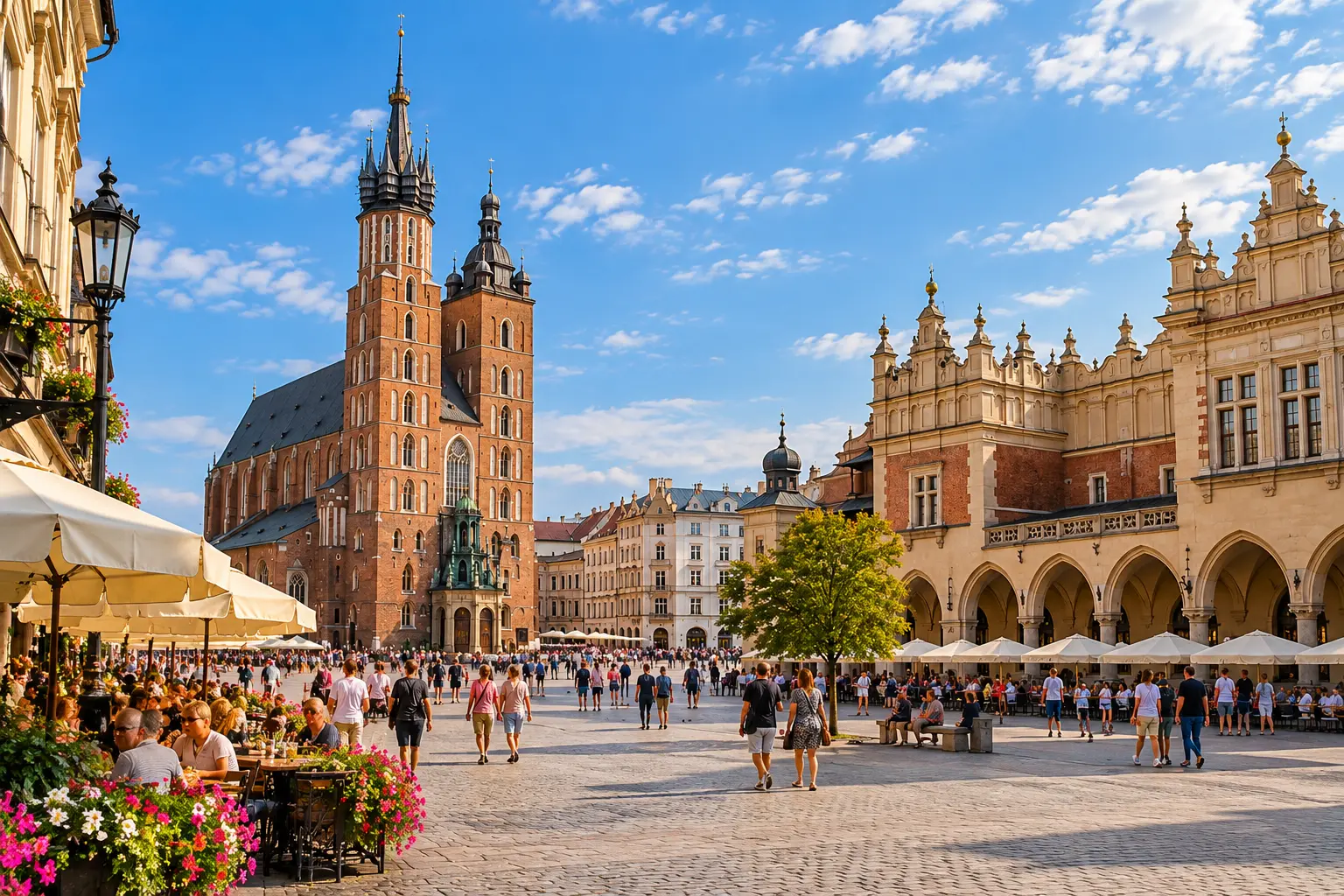
The square changes character throughout the day. Morning is generally better for a quieter look around, while returning after dark gives you a completely different atmosphere.
Don’t treat Main Market Square as something you only need to see once. Visit during the day, then walk through again after dark when the Old Town takes on a different character.
2. Explore Wawel Royal Castle and Wawel Hill
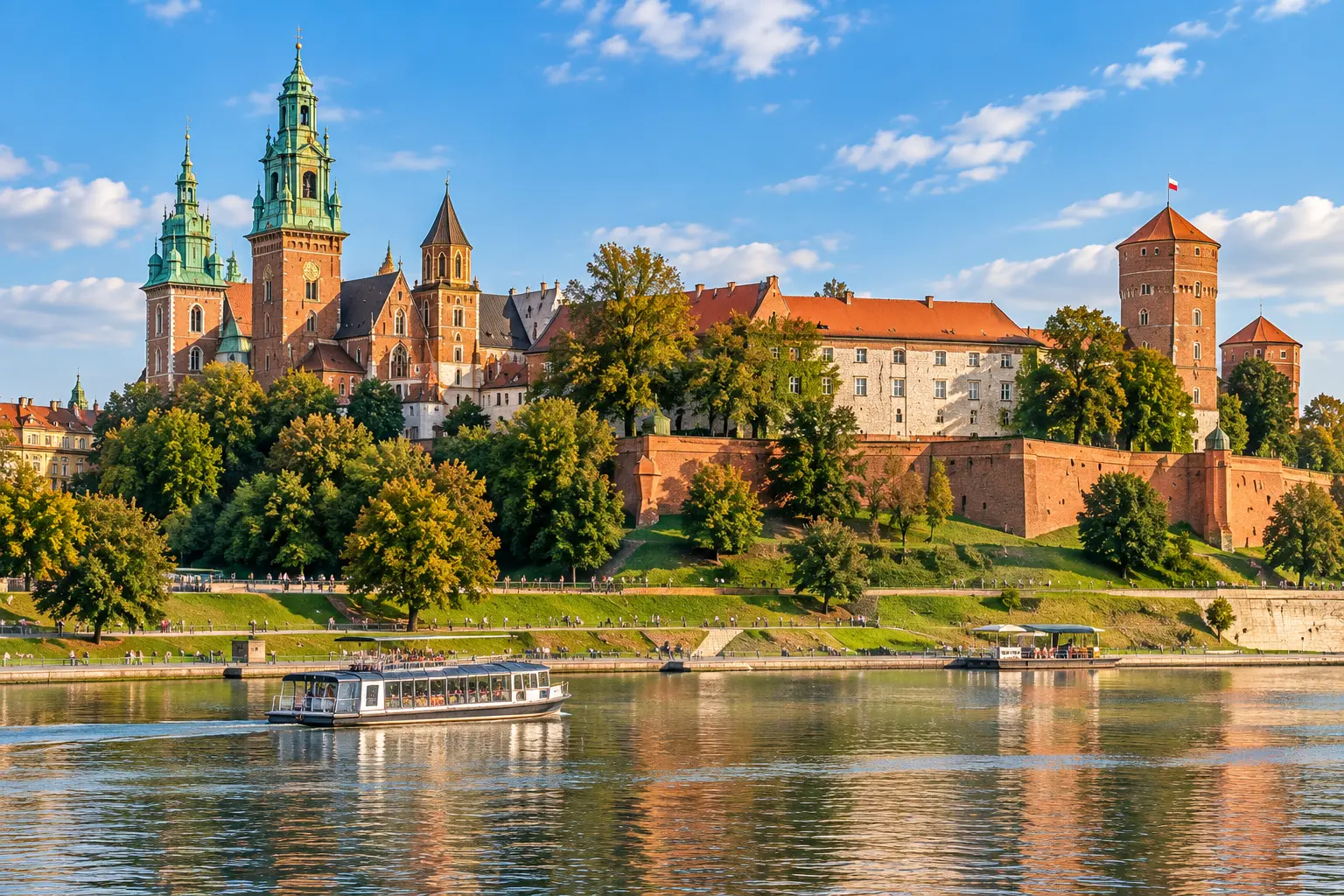
Wawel is one of Kraków’s essential first-time sights, but there’s an important distinction to understand before you arrive: visiting Wawel Hill and visiting the Royal Castle exhibitions are not the same thing.
You can explore the outdoor areas of Wawel Hill during opening hours without buying tickets for every museum route. Paid admission is required for the individual Royal Castle exhibitions and seasonal attractions.
That means you don’t need to buy everything simply because you’re visiting Wawel.
| Wawel Route | Standard Adult Price |
|---|---|
| Castle – First & Second Floor | 95 PLN |
| Castle – First Floor | 57 PLN |
| Castle – Second Floor | 57 PLN |
| Castle Underground | 47 PLN |
| Crown Treasury | 47 PLN |
| Armoury | 47 PLN |
| Dragon’s Den | 15 PLN |
| Royal Gardens | 11 PLN |
For most visitors on a short Kraków city break, we’d choose the part of Wawel that genuinely interests us rather than buying several separate routes.
Wawel also operates limited free admission to selected exhibitions on Mondays. The exhibitions change throughout the year, so please check the current programme rather than assuming a particular route will be free.
Don’t buy every Wawel ticket just because it’s available. On a short trip, exploring the hill and choosing one substantial exhibition is usually a better use of both your time and sightseeing budget.
Wawel has daily visitor limits and individual routes can use timed admission. Online tickets are currently available up to a month ahead, so book your preferred route in advance if Wawel is one of your priorities.
How long should you allow? Around 2–3 hours works well for exploring the hill and visiting one substantial exhibition. You’ll need longer if you plan to visit several routes.
3. Visit Wawel Cathedral
Wawel Cathedral sits within the same complex, but it is separate from Wawel Royal Castle. It has its own admission ticket and visitor arrangements.
The cathedral has played an important role in Polish royal and national history, and a standard sightseeing ticket covers more than simply entering the main cathedral.
The standard ticket includes access to the Cathedral, Sigismund’s Bell, Royal Tombs, Cathedral Museum and Archdiocesan Museum. An audio guide is available separately.
Visit the Cathedral during the same trip to Wawel Hill, but plan it as a separate attraction rather than assuming your Royal Castle ticket includes admission.
Because the cathedral remains an active place of worship, religious services can affect sightseeing access. Check visitor hours for the date of your visit.
4. Give Kazimierz More Than a Quick Walk-Through
Kazimierz deserves more than being treated as somewhere to find dinner after visiting Wawel.
Once a separate town, the district has a complex history and remains one of the most distinctive parts of modern Kraków. Its Jewish heritage is visible around Szeroka Street, synagogues and historical sites, while other parts of the neighbourhood are filled with cafés, restaurants and bars.
Plac Nowy is another useful point around which to explore, but the appeal of Kazimierz comes as much from walking its streets as from visiting a single headline attraction.
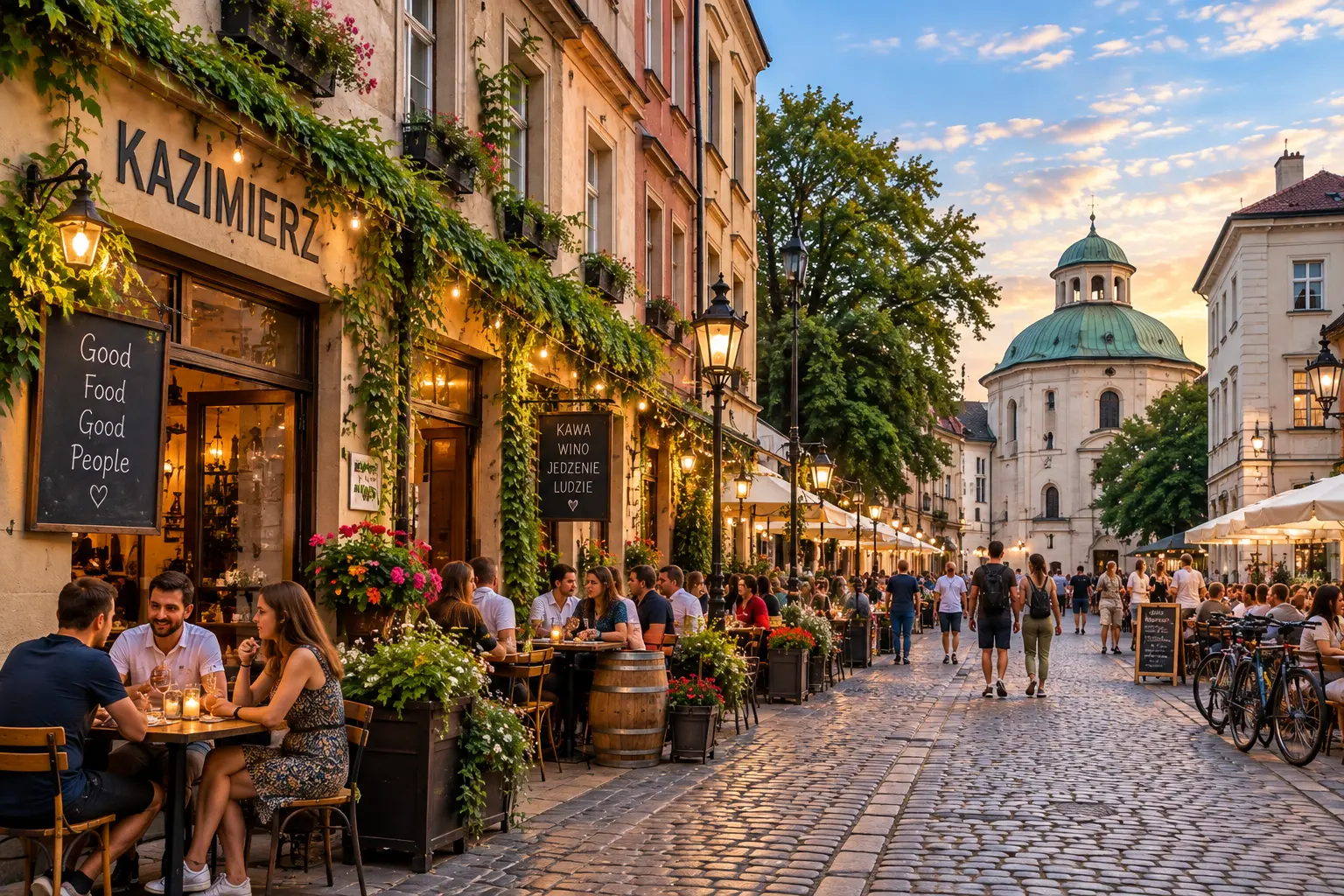
If you want to go inside the synagogues or museums, allow additional time and budget beyond simply exploring the neighbourhood.
A good first-time route is Wawel in the morning followed by Kazimierz during the afternoon and evening. That lets you experience the district’s historical side in daylight without missing its later atmosphere.
5. Visit Schindler’s Factory for Kraków’s Wartime History
Schindler’s Factory is one of Kraków’s most important museums, but its permanent exhibition is broader than many first-time visitors expect.
Rather than focusing solely on Oskar Schindler or the story popularised by the film Schindler’s List, the museum’s permanent exhibition examines Kraków under Nazi occupation from 1939 to 1945.
That broader context is one of the reasons we’d prioritise it if you’re interested in understanding Kraków’s 20th-century history.
This is one attraction we’d book in advance if it’s important to your trip. Visitor numbers are controlled and convenient times can disappear. Individual online tickets are currently released up to 90 days ahead.
The museum currently operates limited free admission on Mondays, but free tickets cannot simply be treated as guaranteed admission.
Free admission isn’t always better value on a short city break. If Schindler’s Factory is a priority, paying for a confirmed time can be more useful than reorganising an entire day around limited free tickets.
Schindler’s Factory is in the Podgórze area, so combine it with Ghetto Heroes Square and other nearby historical sites rather than travelling across the city several times.
We wouldn’t schedule another major museum immediately afterwards. Give yourself some breathing room and continue through Podgórze or along the Vistula instead.
6. Step Inside St Mary’s Basilica
St Mary’s Basilica dominates one side of Main Market Square and is worth seeing from both outside and inside.
One of its highlights is the enormous late-Gothic altarpiece created by Veit Stoss. If you time your visit carefully, you can also see the ceremonial opening of the altarpiece.
The altarpiece opening currently takes place at 11:50 from Monday to Saturday, with different arrangements on Sundays and religious holidays.
You don’t have to enter the basilica to experience one of Kraków’s best-known traditions. The hejnał, or bugle call, is played from the tower every hour and can be heard from the square.
The Bugle Tower is currently closed to visitors until further notice. Check the official Basilica website before your trip if climbing the tower is something you specifically want to do.
St Mary’s fits naturally into an Old Town route: Main Market Square → St Mary’s Basilica → Cloth Hall → surrounding Old Town streets → Planty Park.
7. Go Beneath the Main Square at Rynek Underground
Rynek Underground gives you a completely different perspective on the Main Market Square you’ve just been walking across.
The museum sits beneath the square and uses archaeological remains and exhibits to explore medieval Kraków and the development of the city’s historic centre.
It’s particularly useful if you’re interested in history or need a substantial indoor attraction on a wet-weather day.
The museum currently has limited free admission on Tuesdays. Those free tickets cannot be reserved in advance, so don’t build your entire itinerary around securing one.
8. Use Planty Park as Part of Your Sightseeing Route
Planty forms a green belt around Kraków’s Old Town, following the line of the former medieval fortifications.
We wouldn’t necessarily schedule Planty as a standalone attraction. Its real value is as a pleasant walking route between other parts of the historic centre.
You can use sections of Planty when walking between Main Market Square, Florian Gate, the Barbican and Wawel rather than repeatedly using the same busy Old Town streets.
Think of Planty as part of your route rather than another item on the sightseeing checklist. There’s no need to walk the entire circuit unless you genuinely want to.
9. Explore Podgórze and Ghetto Heroes Square
If you’re visiting Schindler’s Factory, don’t immediately leave the area afterwards.
Podgórze contains several places connected with Kraków’s wartime history, including Ghetto Heroes Square, formerly Plac Zgody, which lay within the Kraków ghetto established by the German occupying authorities.
Today, the square’s memorial uses empty metal chairs to commemorate the victims of the ghetto.
The Eagle Pharmacy on the square is another small museum connected with this history. Pharmacist Tadeusz Pankiewicz and his staff remained in the ghetto area and assisted its Jewish residents.
You can also see a surviving section of the former ghetto wall around Lwowska Street.
These are places connected with persecution and mass murder, not ordinary photo stops. Give yourself enough time to understand what you’re seeing rather than trying to rush through every historical site in a single hour.
A practical route is:
Kazimierz → Vistula → Ghetto Heroes Square → Eagle Pharmacy → Schindler’s Factory → Podgórze
You can reverse that order depending on the time of your Schindler’s Factory ticket.
10. See Kraków from Kościuszko Mound
Kościuszko Mound is one of the better options when you want to get away from the historic centre and see Kraków from above.
The mound was built in honour of Tadeusz Kościuszko and sits several kilometres west of Main Market Square.
Because it’s outside the core sightseeing area and the experience is weather-dependent, we see it as a good addition rather than an essential first-day attraction.
Keep Kościuszko Mound flexible until you know the weather. There’s little benefit in committing one of your clearest itinerary slots to a viewpoint when visibility is poor.
11. Walk Along the Vistula — or Take a River Cruise
The Vistula gives you an easy way to connect several parts of Kraków without making the journey itself feel like wasted time.
The riverside below Wawel is particularly convenient when moving between Wawel, Kazimierz and Podgórze.
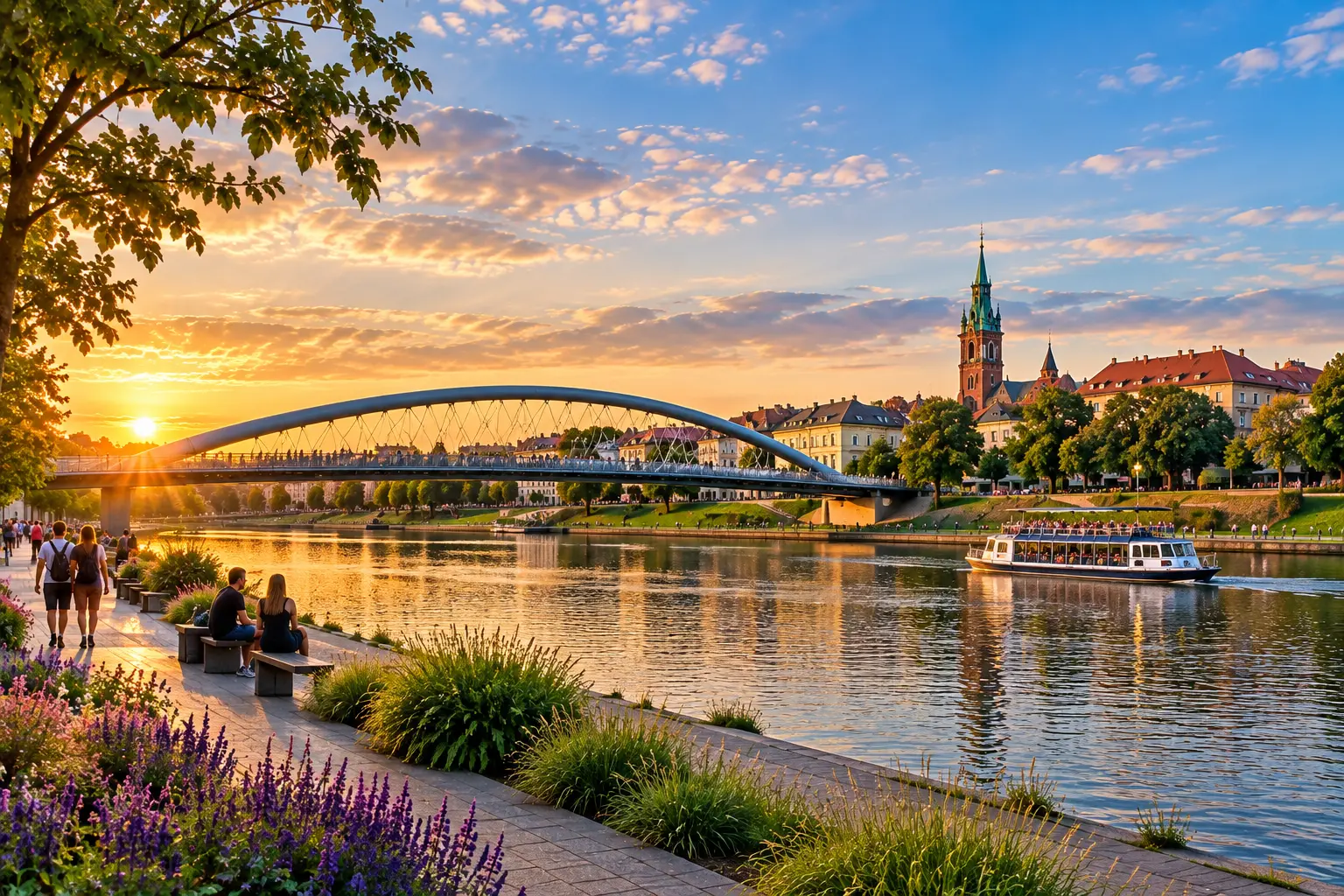
River cruises are also widely available, but prices and routes vary by operator and length. We wouldn’t publish one universal cruise price because the experiences aren’t identical.
For a two-day Kraków trip, we’d consider a cruise optional. With three or four days, it becomes easier to justify, particularly if the weather is good or you want a break from walking.
You don’t necessarily need to pre-book a river cruise from the UK. Waiting until you’re in Kraków lets you make the decision based on the weather and how much energy you have left.
12. Eat at a Traditional Milk Bar
Not every worthwhile Kraków experience requires an admission ticket.
A Polish bar mleczny, or milk bar, is a canteen-style place serving relatively inexpensive Polish food. Despite the English translation, it doesn’t mean you’re visiting somewhere primarily to drink milk.
Menus vary, but you may find dishes such as pierogi, soups, potato pancakes, cabbage dishes and traditional meat dishes.
Don’t assume every milk bar is an undiscovered local secret. Some central establishments are well known to visitors too. Look at current opening hours and recent reviews rather than travelling across Kraków simply because an old travel article recommends one particular place.
13. Experience Kraków After Dark
You don’t need to book a pub crawl to enjoy Kraków in the evening.
Main Market Square and the Old Town are worth revisiting once the daytime sightseeing crowds have changed, while Kazimierz offers a different evening atmosphere with restaurants, cafés and bars spread across the district.
Leave at least one evening without a rigid plan. Kraków is compact enough that you can decide where to eat or spend the evening based on where you finish sightseeing.
What About Auschwitz-Birkenau and Wieliczka Salt Mine?
Both are commonly associated with Kraków trips, but neither should be treated as another central Kraków attraction that can simply be squeezed between Wawel and dinner.
Auschwitz-Birkenau Memorial
The Auschwitz-Birkenau Memorial is in and around Oświęcim, roughly 70 km west of Kraków.
It is a memorial and museum at the site of the former German Nazi concentration and extermination camp, where more than 1.1 million people were murdered, the overwhelming majority of them Jews.
Whether to visit is a personal decision, but if you do, give the site the time and seriousness it requires.
The Memorial recommends allowing at least 3.5 hours to visit both Auschwitz I and Auschwitz II-Birkenau. Once transport from Kraków is included, this becomes a substantial part of your day.
Don’t treat Auschwitz-Birkenau as something to squeeze into an already packed sightseeing schedule. If you choose to visit, make it the main purpose of that part of your day and avoid stacking several other major attractions around it.
Wieliczka Salt Mine
Wieliczka is much closer to Kraków and works more naturally as a half-day excursion.
The Tourist Route takes you underground through chambers, passages and salt-carved spaces, including the well-known Chapel of St Kinga.
Allow roughly 2–3 hours for the underground route itself, plus travel and arrival time. The route involves more than 800 steps, and underground temperatures remain much cooler than outside.
Day trips aren’t compulsory. Kraków has enough to justify several days on its own. Don’t sacrifice the city simply because every generic itinerary tells you that an excursion must be included.
How Much Do Kraków Attractions Cost?
You can see a significant amount of Kraków without paying admission, but several of the city’s major museums and historical attractions charge separately.
This is a useful planning range for a short Kraków city break before adding day trips, guided tours or optional experiences.
| Attraction | Standard Cost |
|---|---|
| Main Market Square | Free |
| Planty Park | Free |
| Kazimierz | Free to explore |
| Wawel Hill outdoor areas | Free during opening hours |
| Wawel Castle – First & Second Floor | 95 PLN |
| Wawel Cathedral | 26 PLN |
| Schindler’s Factory | 60 PLN |
| Rynek Underground | 45 PLN |
| Kościuszko Mound | 34 PLN |
| Ghetto Heroes Square | Free |
A lighter paid itinerary using Wawel Cathedral and Schindler’s Factory would currently cost 86 PLN per person, while still leaving plenty of free sightseeing around the Old Town, Wawel, Kazimierz and Podgórze.
Several Kraków museums operate limited free-admission days, but don’t automatically reorganise your entire trip to save one entrance fee. On a short break, a convenient confirmed time can be worth paying for.
How We’d Spend 3 Days in Kraków
You don’t need to follow a rigid hour-by-hour itinerary. Grouping attractions by area is usually enough to avoid wasting time crossing the city repeatedly.
Old Town & Medieval Kraków
Main Market Square → St Mary’s Basilica → Cloth Hall → Rynek Underground → Planty → Old Town evening
Keep your first day relatively simple. If you arrive late, move Rynek Underground to another day rather than rushing through the Old Town.
Wawel & Kazimierz
Wawel Hill → chosen Castle exhibition → Wawel Cathedral → Vistula → Kazimierz → Plac Nowy
We’d avoid pre-booking the evening. Let Kazimierz be the flexible part of the day for dinner and exploring.
20th-Century Kraków
Kazimierz → Ghetto Heroes Square → Eagle Pharmacy → Schindler’s Factory → Vistula
If you’ve already had enough museums, skip Eagle Pharmacy and spend more time walking through Podgórze instead. Kościuszko Mound can also work as a weather-dependent alternative.
Things to Know Before You Book Kraków Attractions
Schindler’s Factory, Wawel routes and other timed attractions can have limited availability. Pre-book the two or three places you’d genuinely be disappointed to miss and leave the rest flexible.
Some attractions use Monday as a free-admission day, while Rynek Underground currently offers limited free admission on Tuesday. Arrangements vary by attraction.
Free tickets can be limited and may not be reservable in advance. On a short city break, your time matters too.
They sit within the same complex but operate separately, with different tickets and visitor arrangements.
Old Town, Wawel, Kazimierz and Podgórze can be linked into sensible walking routes. Public transport becomes more useful for places further from the centre.
Historic streets can involve cobbles and uneven surfaces, while towers, underground routes and Kościuszko Mound add stairs or inclines. Check individual accessibility information when needed.
Save Kościuszko Mound, a Vistula walk or a river cruise for suitable weather. Museums such as Rynek Underground give you useful alternatives when conditions are poor.
Some Wawel attractions and other Kraków experiences don’t operate identically throughout the year. Check official opening information for your actual travel dates.
Old Town and Kazimierz are enjoyable places to explore without a reservation. Leave at least one evening flexible.
The prices in this guide were checked in September 2026, but admission prices, opening hours and free-entry arrangements can change.
Which Kraków Attractions Are Actually Worth Your Time?
Our take: For a first Kraków city break, build the trip around four things rather than fourteen: Old Town, Wawel, Kazimierz and one major museum.
With three days, add Podgórze and another museum or viewpoint. With four days, you have enough breathing room to consider Wieliczka or another excursion without turning Kraków itself into somewhere you merely pass through.
Most importantly, don’t confuse seeing more attractions with having a better trip. Kraków is compact enough to leave gaps in your itinerary, walk somewhere you hadn’t planned to visit, stop for food and return to places that look completely different after dark.
Frequently Asked Questions
What are the must-see attractions in Kraków for a first visit?
For a first visit, prioritise Main Market Square, Wawel Hill and Kazimierz. If you have three days, add a major museum such as Schindler’s Factory and spend some time exploring Podgórze.
How many days do you need in Kraków?
Three full sightseeing days is a good amount of time for a first Kraków city break. It allows you to explore the Old Town, Wawel, Kazimierz and another part of the city without constantly rushing. Two days can still work if you’re selective, while four days gives you considerably more flexibility for museums, viewpoints or a day trip.
Can you see Kraków in two days?
Yes. Use one day for the Old Town and another for Wawel and Kazimierz. Avoid trying to add several museums and a major excursion unless one of them is particularly important to you.
What can you do for free in Kraków?
You can explore Main Market Square, Planty Park, Kazimierz, the outdoor areas of Wawel Hill during opening hours, Ghetto Heroes Square and the Vistula riverside without paying admission. Several museums also operate limited free-admission days.
Do Kraków attractions need to be booked in advance?
Not all of them. Advance booking is particularly useful for Schindler’s Factory and any Wawel exhibition you definitely want to see. Outdoor areas such as Main Market Square, Planty and Kazimierz require no reservation.
Is Kraków easy to explore on foot?
Yes. The Old Town, Wawel and Kazimierz are close enough to combine on foot, and Podgórze can also be reached without relying heavily on public transport. Transport becomes more useful for attractions further from the centre, such as Kościuszko Mound.
Is Wieliczka Salt Mine in Kraków?
No. Wieliczka is outside Kraków and is better treated as a half-day excursion. With only two days, we’d generally concentrate on Kraków itself unless the salt mine is one of your main reasons for travelling.
Is Auschwitz-Birkenau in Kraków?
No. The Auschwitz-Birkenau Memorial is in and around Oświęcim, roughly 70 km west of Kraków. A visit from Kraków takes a substantial part of the day and should be planned separately rather than squeezed into a city sightseeing schedule.
Are Kraków attractions expensive?
They don’t have to be. Many of Kraków’s core experiences are free. For a typical short visit, around 100–250 PLN per person is a useful budget for a selection of paid central attractions before adding day trips, guided tours or optional experiences.
This guide was created by the Sunmaj Editorial Team to help UK travellers make better-informed travel decisions. We research practical details, compare options and check relevant costs and official sources to provide clear, independent travel guidance.
Prices and visitor information checked: September 2026.