Budapest City Break Guide for UK Travellers: Everything You Need to Know
Budapest is one of Europe’s most distinctive city-break destinations. Split by the Danube, the Hungarian capital combines grand architecture, thermal baths, historic neighbourhoods, riverside views and one of Central Europe’s liveliest evening scenes. But Budapest is also a city where a little planning makes a noticeable difference. It’s much larger than destinations such as Kraków,…
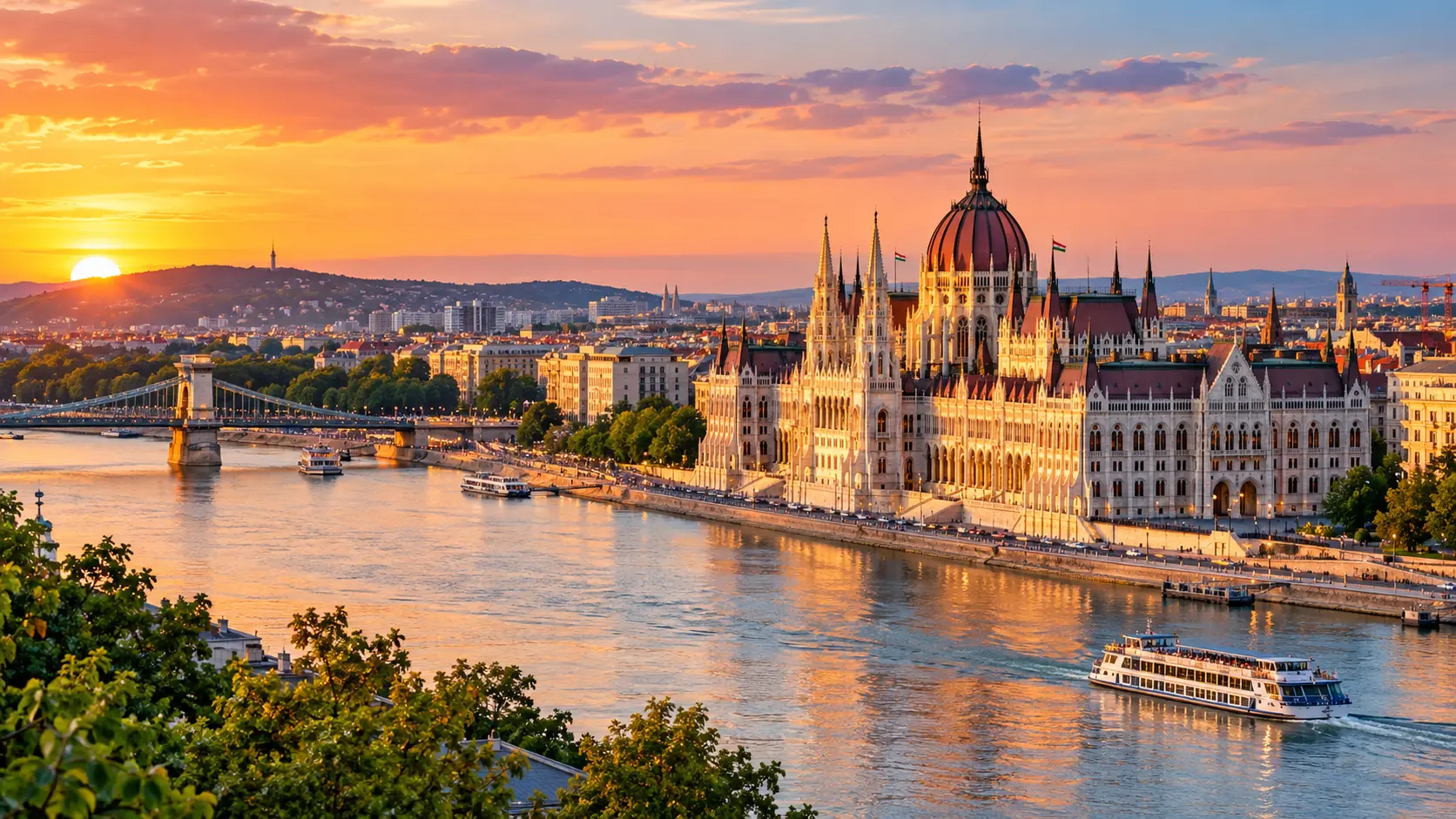
Budapest is one of Europe’s most distinctive city-break destinations. Split by the Danube, the Hungarian capital combines grand architecture, thermal baths, historic neighbourhoods, riverside views and one of Central Europe’s liveliest evening scenes.
But Budapest is also a city where a little planning makes a noticeable difference.
It’s much larger than destinations such as Kraków, the main sights are spread across both Buda and Pest, and choosing where you stay can affect how much time you spend travelling around.
For UK travellers considering a long weekend, the important question isn’t simply whether Budapest is worth visiting. It’s how many days you need, where you should stay, what you should budget for and how to organise the city without trying to do too much.
This Sunmaj guide covers the practical side of planning your first Budapest city break — from flights and airport transfers to accommodation, transport, sightseeing and spending money.
Is Budapest right for your city break?
Budapest makes particular sense if you want more than a compact sightseeing weekend. Its thermal baths, Danube setting, architecture, food and nightlife give you several different experiences within one trip. We’d allow at least three full days, with four being even better for a first visit.
Is Budapest Worth Visiting?
For most travellers looking for a European city break with plenty of variety, yes.
Budapest doesn’t rely on one headline attraction.
You can spend one part of your trip exploring Castle Hill and historic Buda, another around Parliament and central Pest, several hours relaxing in a thermal bath, and an evening discovering the city’s restaurants, bars and Danube views.
That variety is one of Budapest’s biggest strengths.
It’s particularly well suited to travellers who enjoy combining sightseeing with experiences rather than spending an entire trip moving between museums and monuments.
But Budapest isn’t as compact as some competing Central European city-break destinations.
You’ll probably use public transport regularly, and trying to squeeze both sides of the city, a thermal bath, museums and nightlife into two days can leave you rushing.
Don’t judge Budapest purely by how many attractions you can fit into a weekend. Part of the appeal is having enough time for a thermal bath, walking beside the Danube or spending an evening exploring Pest without constantly checking your itinerary.
How Many Days Do You Need in Budapest?
For a first visit, we’d aim for three to four full days.
2 days — Possible, but selective
A two-day trip can work if you’re prepared to prioritise heavily.
You could cover several of the headline sights, but we’d avoid trying to combine Castle Hill, Parliament, multiple museums, a thermal bath and a long list of restaurants and bars.
3 days — A strong city break
Three full days gives you enough time to divide Budapest into logical areas.
You can explore Buda, spend proper time in central Pest and still make room for one of the experiences that distinguishes Budapest from other European cities — such as a thermal bath.
Budapest’s official tourism organisation also publishes three-day itineraries, reflecting how naturally the city fits into this length of stay.
4 days — Our preferred first visit
Four days gives Budapest room to breathe.
You can slow down, spend longer around the Danube, explore additional neighbourhoods and avoid treating your thermal-bath visit as something that has to be squeezed between attractions.
5+ days — Explore beyond the essentials
With five days or longer, you can move beyond the standard first-time itinerary and explore more museums, neighbourhoods and experiences without sacrificing the core sights.
Three days works; four is better. Budapest rewards having slightly more time than a very compact city such as Kraków. If you can add an extra night without significantly increasing the cost of your trip, we’d seriously consider it.
When Is the Best Time to Visit Budapest?
Budapest works as a year-round city break, but the experience changes considerably with the seasons.
For a first visit focused on sightseeing, we’d generally look first at spring or early autumn. These periods can give you a better balance between comfortable walking conditions, outdoor time and avoiding the hottest part of summer.
| Season | What to Expect | Best For |
|---|---|---|
| Spring | Increasing daylight, outdoor terraces and generally better conditions for exploring on foot | Sightseeing and first visits |
| Summer | Long days, busy outdoor areas and a lively evening atmosphere, but potentially hot weather | Nightlife and long sightseeing days |
| Early autumn | A useful balance between outdoor sightseeing and cooler conditions | Walking and cultural trips |
| Winter | Cold weather and shorter days, but thermal baths take on a different appeal | Winter breaks and thermal-bath experiences |
For a sightseeing-heavy first trip, we’d favour late spring or early autumn. Budapest involves more walking and public transport than a very compact city break, so comfortable daytime temperatures can make a meaningful difference.
If you’re travelling specifically for Christmas markets, a festival, major sporting event or another seasonal experience, check the dates before booking your flights. Accommodation demand and prices can change substantially around major events.
Getting to Budapest from the UK
Budapest Ferenc Liszt International Airport (BUD) is the main international airport serving the Hungarian capital.
Flight schedules from the UK vary by departure airport, airline and season, so we wouldn’t build your plans around a fixed list of routes that can quickly become outdated.
Instead, compare the airports you can realistically reach from home and calculate the total journey cost.
A cheap headline airfare can become much less attractive once you add:
- Baggage charges
- Seat-selection fees
- Transport to your UK departure airport
- Airport parking
- An overnight airport hotel if required
- Budapest airport transfers
Departure and arrival times matter too. A slightly more expensive flight that gives you most of your first day in Budapest can sometimes provide better overall value than a cheaper flight arriving late at night.
Compare trip cost rather than airfare alone. If one UK airport is significantly easier and cheaper for you to reach, paying a little more for the flight can still produce a cheaper overall city break.
Getting from Budapest Airport to the City Centre
For many first-time visitors staying centrally, the 100E Airport Express is the simplest public-transport option to check first.
The service connects Budapest Ferenc Liszt International Airport with central Budapest, including Kálvin tér and Deák Ferenc tér, and operates 24 hours a day.
The standard airport shuttle bus single ticket currently costs 2,500 HUF.
| Option | How It Works | Best For |
|---|---|---|
| 100E Airport Express | Direct airport bus to central Budapest | Most first-time visitors staying centrally |
| 200E + Metro M3 | Bus to Kőbánya-Kispest, then metro towards central Budapest | Travellers using regular BKK tickets or travelcards |
| Taxi | Door-to-door transfer | Groups, heavy luggage or maximum convenience |
Don’t assume your normal Budapest ticket automatically covers the 100E. The Airport Express has its own fare. Check the ticket conditions in BudapestGO or on the BKK website before travelling.
100E Airport Express
The 100E is designed specifically for airport passengers and provides a direct connection between the airport and central Budapest.
It runs around the clock, seven days a week, making it particularly convenient if your flight arrives early in the morning or late at night.
The standard single fare is currently 2,500 HUF. Tickets can be purchased through the BudapestGO app, and BKK also allows passengers to purchase and validate the airport ticket using a bank card through its Pay&GO system.
200E and Metro M3
The alternative public-transport route is the 200E bus, which connects the airport with Kőbánya-Kispest.
From there, you can continue towards central Budapest using Metro M3.
This isn’t as straightforward as taking the direct 100E, but it can make sense depending on where you’re staying and the ticket or pass you’re already using.
Taxi
A taxi becomes more attractive if you’re travelling as a group, carrying substantial luggage or staying somewhere that would require additional public-transport connections.
It also gives you a direct journey to your accommodation rather than arriving at a central transport hub and continuing from there.
However, compare the cost against the 100E before deciding whether the additional convenience is worth paying for.
We’d check the 100E first for a typical first-time city break. It removes the need to change between bus and metro and takes you directly into central Budapest. The 200E route becomes more interesting if it better suits your accommodation or the transport product you’re already using.
Where Should You Stay in Budapest?
Choosing the right area matters more in Budapest than it does in some smaller European city-break destinations.
The Danube divides the city into Buda and Pest, and although public transport makes it easy to travel between them, the two sides offer noticeably different experiences.
For most first-time visitors spending three or four days in Budapest, we’d generally start by looking at central Pest.
Buda or Pest — Which Side Is Better for a First Visit?
| Buda | Pest | |
|---|---|---|
| Atmosphere | Quieter, historic and more residential in many areas | Busier, livelier and more urban |
| Sightseeing | Castle Hill, Fisherman’s Bastion and Matthias Church | Parliament, St Stephen’s Basilica, Jewish Quarter and many central sights |
| Restaurants & Nightlife | More limited depending on the area | Much wider choice in central districts |
| Transport | Good, but you’ll often cross the river | Excellent connections across the central city |
| Best For | Quieter stays and historic surroundings | First visits, restaurants, nightlife and convenience |
We’d choose Pest for most first-time city breaks. You’ll generally have easier access to restaurants, nightlife, transport and a larger concentration of places you’ll want to visit. Buda is worth considering if you specifically want a quieter base and don’t mind crossing the river more often.
District V — Best for First-Time Visitors and Central Sightseeing
District V, known as Belváros-Lipótváros, sits at the heart of central Pest and includes some of Budapest’s most recognisable locations.
You’ll be close to the Danube, the Hungarian Parliament area, St Stephen’s Basilica and major transport connections.
For a short first trip, the biggest advantage is convenience. You can reach many central sights on foot while still having straightforward public transport for journeys farther across the city.
Best for: First-time visitors, short stays and travellers prioritising location.
Trade-off: Central accommodation can command higher prices, particularly in strong locations close to the river and major landmarks.
District VI — Best for a Central Base with Good Transport
District VI — Terézváros — runs around Andrássy Avenue and offers a useful compromise between central sightseeing and access to other parts of Budapest.
Depending on exactly where you stay, you’ll have convenient access towards St Stephen’s Basilica, the Opera House, Heroes’ Square and City Park.
The M1 metro also runs beneath much of Andrássy Avenue, making this a practical area if you expect to use public transport regularly.
Best for: Couples, sightseeing and travellers who want a central but practical base.
District VII — Best for Nightlife and Evening Atmosphere
District VII — Erzsébetváros — includes Budapest’s historic Jewish Quarter and much of the city’s best-known nightlife area.
It’s packed with restaurants, cafés and bars, and is home to the ruin-bar scene most closely associated with Budapest.
That makes it an appealing base if evenings out are an important part of your trip.
But location within the district matters.
Accommodation close to busy nightlife streets may not be the right choice if you value quiet nights more than being steps away from bars.
Best for: Nightlife, groups of friends, restaurants and lively evenings.
Trade-off: Some streets can be noisy late into the night.
District I — Best for Historic Buda and a Quieter Stay
District I includes the Castle District and some of Budapest’s most atmospheric historic surroundings.
Staying here puts attractions such as Fisherman’s Bastion, Matthias Church and Buda Castle close by, while elevated areas offer some of the city’s most memorable views across the Danube towards Pest.
The trade-off is that many restaurants, bars and evening activities are concentrated on the Pest side.
Best for: Couples, historic atmosphere and travellers who prefer quieter evenings.
Trade-off: You’ll probably cross the river regularly during your stay.
For a first three- or four-night Budapest trip, we’d concentrate our accommodation search around District V, District VI or the quieter parts of District VII. That keeps you on the Pest side with strong transport connections and plenty within walking distance.
Don’t choose a Budapest hotel based on the district number alone. Check its exact position on the map. Budapest districts can cover sizeable areas, and two hotels technically in the same district can give you very different city-break experiences.
What Should You Do in Budapest?
Budapest is large enough that trying to work through a long attraction list in random order will waste time.
For a first visit, we’d organise your sightseeing geographically and give each day a different focus.
A three-day trip can cover the essential Budapest experience without turning every day into a race between landmarks.
Day 1 — Parliament, Central Pest and the Danube
Start your first day on the Pest side of the river.
The Hungarian Parliament Building is one of Budapest’s defining landmarks, and the surrounding Danube waterfront gives you an immediate sense of the city’s scale and setting.
From here, explore the central area around St Stephen’s Basilica before continuing towards the river and the Chain Bridge.
Depending on your pace, this is also a good day for exploring some of central Pest’s streets, cafés and restaurants rather than filling every hour with ticketed attractions.
In the evening, return to the Danube.
Budapest looks noticeably different after dark, when Parliament, Buda Castle and the bridges are illuminated.
If seeing Parliament from across the Danube is important to you, don’t spend your entire first day on the Pest side. The riverside around Buda gives you one of the most recognisable views back towards the Parliament Building.
Day 2 — Castle Hill and Historic Buda
Use your second day to explore the Buda side.
Castle Hill brings several major sights together, including Buda Castle, Fisherman’s Bastion and Matthias Church.
The area is compact enough to explore on foot once you’re there, but we’d allow proper time rather than treating it as a quick photo stop.
Fisherman’s Bastion is particularly popular for its views across the Danube towards Parliament and Pest.
After exploring Castle Hill, you can continue through Buda or cross back towards Pest later in the day.
This geographic approach avoids repeatedly travelling from one side of Budapest to the other.
Day 3 — Thermal Baths, City Park and Budapest After Dark
Your third day is where we’d make room for an experience that feels distinctly Budapest.
For many first-time visitors, that means visiting one of the city’s thermal baths.
Széchenyi Thermal Bath is the obvious first-trip option if you want the large, famous bath complex most closely associated with Budapest.
It’s located beside City Park, which makes it practical to combine with nearby sights such as Heroes’ Square rather than travelling across the city solely for the bath.
Don’t underestimate how much time the experience can take. If you’re paying for a thermal-bath visit, we’d rather allow several relaxed hours than squeeze it between multiple attractions.
Use your final evening for whichever side of Budapest you haven’t properly experienced yet — whether that’s dinner, the Jewish Quarter, a ruin bar or another walk along the Danube.
Think in areas rather than attractions. Keeping Pest, Buda and City Park largely separate reduces unnecessary travelling and leaves more time to actually experience Budapest.
Should You Visit a Thermal Bath in Budapest?
For most first-time visitors, we’d say it’s worth considering.
Thermal bathing is one of the experiences that differentiates Budapest from many competing European city-break destinations.
But that doesn’t mean every traveller needs to visit the biggest or most famous bath.
Széchenyi Thermal Bath
Széchenyi is one of Budapest’s best-known thermal-bath complexes and is particularly recognisable for its large outdoor pools.
Its location beside City Park also makes it relatively easy to incorporate into a sightseeing itinerary.
Current full-day locker ticket prices start at around 13,200 HUF on Monday–Thursday, rising to around 14,800 HUF on Fridays and weekends, with higher pricing on some holidays and peak dates.
Those prices make a bath visit a meaningful part of your Budapest activity budget rather than a minor incidental expense.
Don’t automatically choose a thermal bath because you’ve seen it on social media. Compare the current admission price, location and the type of experience you actually want. If you do choose Széchenyi, give yourself enough time to enjoy it rather than paying the entrance fee for a rushed visit.
What Is Budapest Like at Night?
Nightlife is one of the areas where Budapest offers considerably more variety than a sightseeing-only destination.
The city is particularly associated with its ruin bars, many of which developed in older buildings around the Jewish Quarter.
But Budapest nightlife doesn’t have to mean spending the evening moving between bars.
You can have dinner in central Pest, walk beside the illuminated Danube, see Parliament and Buda Castle after dark or simply spend an evening exploring the city at a slower pace.
For travellers who do want bars and a livelier atmosphere, District VII is the obvious area to explore.
If nightlife matters to you, staying close to District VII can be convenient. If it doesn’t, avoid choosing accommodation directly on one of the busiest nightlife streets simply because the hotel looks centrally located.
We’re preparing a separate Best Things to Do in Budapest guide where we’ll compare the major attractions, current admission prices, how much time each one needs and which experiences we’d prioritise on a first visit.
How Much Does a 3-Night Budapest City Break Cost?
Budapest can still work well for travellers watching their spending, but it shouldn’t automatically be treated as an ultra-cheap European city break.
Your biggest costs will usually be flights and accommodation, while the final total can rise noticeably once you add thermal baths, paid attractions, airport transfers and evenings out.
Rather than suggesting one fixed price, we’ve built three example budgets for two UK travellers sharing accommodation.
An example budget for two UK travellers, covering flights, accommodation, everyday spending, local transport and activities.
| Cost | Budget | Mid-range | Comfortable |
|---|---|---|---|
| Return flights | £120 | £180 | £260 |
| Accommodation — 3 nights | £165 | £300 | £480 |
| Food & drink | £120 | £200 | £320 |
| Airport & local transport | £35 | £50 | £80 |
| Activities | £60 | £120 | £220 |
| Estimated total | £500 | £850 | £1,360 |
| Approx. per person | £250 | £425 | £680 |
Look at the whole trip before cutting small everyday expenses. Saving £50 on well-located accommodation may not be worthwhile if it leaves you spending more time and money travelling across Budapest. Flights and accommodation usually offer much greater opportunities for meaningful savings than trying to cut a few pounds from meals.
What Can Push Your Budapest Budget Higher?
The headline cost of getting to Budapest doesn’t always tell you what you’ll actually spend once you’re there.
Several choices can increase the total relatively quickly:
- Staying in a premium central hotel close to the Danube
- Travelling during weekends, festivals or other high-demand periods
- Adding checked baggage to low-cost flights
- Visiting several paid attractions
- Including a major thermal bath such as Széchenyi
- Taking taxis rather than public transport
- Eating and drinking primarily in heavily visited central areas
For planning purposes, we’d allow roughly £400–£450 per person for a mid-range three-night Budapest trip when two people are sharing accommodation. That isn’t a target price or a guarantee — it’s a useful starting budget that gives you room for decent accommodation, eating out, transport and some paid experiences.
Is Budapest More Expensive Than Kraków?
Using our example Sunmaj budgets, Budapest comes out somewhat more expensive for a comparable three-night city break.
| Example Trip | Kraków | Budapest |
|---|---|---|
| Budget | £223 pp | £250 pp |
| Mid-range | £378 pp | £425 pp |
| Comfortable | £625 pp | £680 pp |
That doesn’t mean Kraków will always be cheaper.
A particularly good Budapest flight or hotel deal can easily change the result for your dates. Likewise, expensive flights to Kraków can outweigh differences in everyday spending.
Budapest also offers experiences that aren’t directly comparable with Kraków, particularly its thermal baths, so the activity budget can naturally be higher.
When comparing the two cities, price the same dates, departure airport and travel style. Comparing a £30 Kraków flight in February with a £100 Budapest flight during a summer weekend doesn’t tell you which destination normally offers better value.
For a much deeper comparison, see our Kraków vs Budapest city break guide, where we compare costs alongside sightseeing, food, nightlife, transport and the overall experience.
Getting Around Budapest
Budapest has an extensive public transport network, and most visitors will use it more often than they would in a compact city such as Kraków.
The network includes metro lines, trams, buses and trolleybuses, making it relatively straightforward to move between Buda, Pest and attractions farther from the central riverfront.
You’ll still do plenty of walking, but we wouldn’t plan a first Budapest trip around walking alone.
Budapest Public Transport Ticket Prices
As of our latest check, standard BKK fares include:
| Ticket | Current Fare |
|---|---|
| Single ticket | 500 HUF |
| 30-minute ticket | 600 HUF |
| 90-minute ticket | 850 HUF |
| 24-hour Budapest travelcard | 2,750 HUF |
| 72-hour Budapest travelcard | 5,750 HUF |
| 100E Airport Express | 2,500 HUF |
Should You Buy a 72-Hour Budapest Travelcard?
For a three-day first visit, the 72-hour travelcard is worth comparing against individual tickets.
At 5,750 HUF, it allows unlimited travel for 72 hours on almost all regular BKK services within Budapest.
That includes the metro, trams and buses you’ll use for most sightseeing journeys.
The important exception for many visitors is the 100E Airport Express, which isn’t included with the standard 72-hour travelcard.
If you’re staying for three days and expect to use public transport several times each day, we’d seriously consider the 72-hour travelcard. It removes the need to think about buying a ticket for every ordinary journey and makes it easier to change plans during the day.
Using the Metro
Budapest has four metro lines — M1, M2, M3 and M4 — connecting many of the areas visitors are likely to use.
The metro is particularly useful when you need to cover more ground quickly rather than walking between distant parts of the city.
M1 is also notable in its own right. The historic line runs beneath Andrássy Avenue and provides useful access towards Heroes’ Square and City Park.
Using Budapest’s Trams
Don’t overlook the tram network.
Some tram routes are useful not only for getting around but also for seeing Budapest from street level.
For a first visit, public transport isn’t simply something to use when you’re tired — it can help you organise sightseeing much more efficiently.
Using BudapestGO
BudapestGO is BKK’s official journey-planning and mobile-ticketing app.
You can use it to plan public transport journeys and buy eligible tickets and passes digitally.
If you’re using mobile tickets, make sure you understand the validation rules before your first journey. Buying a ticket in the app doesn’t necessarily mean you’ve completed every step required to travel.
Learn the ticket rules before your first journey rather than at the metro gate. Single and time-based tickets have validation requirements, while travelcards work differently. A couple of minutes spent understanding BudapestGO when you arrive can save confusion later.
Walking Around Budapest
Budapest is still a rewarding city to explore on foot.
Walking works particularly well when you’re exploring one area at a time — for example central Pest, the Jewish Quarter or Castle Hill.
The mistake is assuming that because individual neighbourhoods are walkable, the entire sightseeing itinerary should be.
Distances add up quickly when you repeatedly cross the city.
Paying for Things in Budapest
Hungary uses the Hungarian forint (HUF), not the euro.
Cards are widely useful for a Budapest city break, but we’d still recommend understanding how your bank handles foreign-currency transactions before travelling.
The important thing isn’t simply whether your card works abroad. Check whether your provider charges:
- Foreign transaction fees
- ATM withdrawal fees
- Additional exchange-rate charges
Those small charges can add up across several days.
Should You Pay in Pounds or Forints?
If a card terminal or ATM offers to convert your transaction into pounds, don’t automatically accept it.
This is known as dynamic currency conversion. It means the conversion is carried out by the merchant or ATM provider rather than allowing your own card network or bank to process the transaction in Hungarian forints.
Always check the exchange rate and any charges being offered before choosing.
When given a genuine choice between paying in HUF or GBP, check the conversion carefully. If your travel card or bank offers favourable foreign-currency terms, paying in the local currency may give you a better rate than accepting a merchant’s conversion into pounds.
Do You Need Cash in Budapest?
You don’t necessarily need to carry large amounts of cash for a typical Budapest city break.
However, having a modest amount of Hungarian forint available can still be useful for smaller purchases or situations where you’d rather not rely entirely on one payment method.
We wouldn’t exchange a large amount of money before travelling simply because Hungary doesn’t use the euro.
Instead, check your bank or travel card’s exchange rates and withdrawal charges, then decide how much cash you realistically expect to use.
Don’t judge an ATM solely by how convenient its location looks. Check any withdrawal fee and currency-conversion offer before confirming the transaction. Your own bank may also charge for overseas cash withdrawals, so check both sides of the transaction before travelling.
Things to Know Before Booking a Budapest City Break
Build your spending budget in HUF rather than assuming you’ll pay in euros. Check how your bank or travel card handles foreign-currency transactions before departure.
The main visitor areas are spread across Buda and Pest. Walking is excellent within individual areas, but public transport will make a three- or four-day itinerary considerably easier.
You can see a great deal in three days, but a fourth day makes it easier to include a thermal bath and slower neighbourhood exploration without constantly watching the clock.
For most first-time visitors, central Pest provides the easiest combination of sightseeing, restaurants, transport and evening options. Check the hotel’s exact location rather than relying only on its district number.
The 100E Airport Express isn’t simply another ordinary city bus. Check the current airport ticket and any pass-holder options before travelling rather than assuming your standard Budapest ticket covers it.
A bath visit can take several hours and represents a meaningful activity cost. Build it into your itinerary rather than squeezing it between several major attractions.
District VII can be an excellent base if restaurants and nightlife are priorities, but accommodation directly beside busy bars may not suit travellers who value quiet nights.
Budapest is enjoyable on foot, but repeatedly crossing large parts of the city wastes valuable sightseeing time. Combine walking with the metro, trams and buses.
If visiting Parliament, a particular thermal bath or another timed attraction is essential to your trip, check official availability before arriving rather than assuming tickets will be available on the day.
UK travellers should check current official passport, Schengen and European border-system guidance before travelling to Hungary.
How Should You Budget Your Spending Money?
Rather than trying to predict every coffee, meal and tram journey, divide your Budapest spending into a few practical categories.
| Budget Area | What to Allow For |
|---|---|
| Before travel | Flights, baggage, UK airport travel and insurance |
| Accommodation | Hotel, apartment or hostel for your complete stay |
| Airport transfer | 100E Airport Express, alternative public transport or taxi |
| City transport | Individual BKK tickets or a suitable travelcard |
| Food & drink | Breakfasts, lunches, dinners, cafés and evenings out |
| Activities | Thermal baths, museums, Parliament and other paid attractions |
Budapest is easier to budget when you separate the big fixed costs from everyday spending. Work out flights, accommodation, airport transfers and your priority paid experiences first. Once those are covered, you’ll have a much clearer idea of how much spending money you actually need.
Entry Requirements for UK Travellers
British citizens travelling on a full British citizen passport can currently visit Hungary for tourism without a visa for up to 90 days in any 180-day period.
Hungary is part of the Schengen area, so time spent in other Schengen countries during the same rolling 180-day period also counts towards this limit.
Passport Requirements
For travel to Hungary, your passport must meet the Schengen passport rules.
It must:
- Have a date of issue less than 10 years before the date you arrive
- Have an expiry date at least three months after the day you plan to leave the Schengen area
Don’t rely simply on having several months left on your passport. Check both the issue date and expiry date against the current rules before booking or travelling.
What Is the EU Entry/Exit System (EES)?
The EU’s Entry/Exit System (EES) has changed how short-stay travellers from countries including the UK are processed when entering and leaving the Schengen area.
British travellers may be required to register biometric information such as a photograph and fingerprints at the border.
EES is designed to create a digital record of entry and exit and replace the previous reliance on manual passport stamps for short-stay visitors.
Allow for the possibility of additional time at border control, particularly while travellers and airports become accustomed to the system.
What About ETIAS?
ETIAS — the European Travel Information and Authorisation System — is separate from EES.
As of our latest check, ETIAS is not yet operating. The UK Government says it is expected to begin from autumn 2026, but the specific launch date is still to be announced.
You therefore shouldn’t pay a website claiming that you currently need to purchase an ETIAS authorisation for a Budapest trip.
Check the latest UK Government Hungary travel advice shortly before departure. Passport requirements and European border systems can change, and an article written months before your trip shouldn’t be your final entry check.
Who Is Budapest Best For?
Budapest is particularly well suited to travellers who want several different experiences from the same city break.
We’d put it high on the shortlist if you’re looking for:
- A three- or four-day European city break
- Grand architecture and historic landmarks
- Thermal baths
- Good nightlife and evening atmosphere
- A city with plenty to do after dark
- Views and walks along a major river
- A mixture of sightseeing and experiences
- A destination that works well without hiring a car
Is Budapest Good for Couples?
Yes. Budapest works particularly well for couples because the trip doesn’t have to revolve entirely around conventional sightseeing.
You can combine historic areas and major landmarks with thermal baths, restaurants, evenings beside the Danube and quieter walks around Buda.
For couples, we’d generally look at District V, District VI or Buda before choosing accommodation in the busiest parts of the nightlife district.
Is Budapest Good for Groups of Friends?
Budapest is also a natural choice for groups, particularly when nightlife is part of the trip.
District VII provides easy access to restaurants, bars and the city’s well-known ruin-bar scene, while daytime activities give you plenty to do beyond nightlife.
For groups, accommodation location becomes especially important. Saving money on a property far from the areas you’ll spend most of your time can quickly become inconvenient.
Is Budapest Good for First-Time European City Breaks?
Yes, provided you’re comfortable using public transport.
Budapest is more spread out than Kraków, but the metro, tram and bus network makes the main visitor areas manageable.
It requires slightly more planning than a very compact destination, but you don’t need a complicated itinerary to enjoy it.
Who Might Prefer Somewhere Else?
Budapest won’t suit every trip.
If your priority is a very small historic centre where almost everything can be reached on foot, Kraków may feel easier.
If you want a beach or resort holiday, Budapest obviously isn’t the right type of destination.
And if you’re only willing to spend one or two nights somewhere, you may not have enough time to experience what makes Budapest distinctive without rushing.
Budapest Pros and Cons
| What We Like | Things to Consider |
|---|---|
| Excellent variety for a short city break | More spread out than compact destinations such as Kraków |
| Distinctive thermal-bath experience | Bath admission adds noticeably to the activity budget |
| Strong public transport network | Ticket and airport-bus rules require a little understanding |
| Impressive Danube setting and architecture | Trying to walk everywhere can waste time |
| Good restaurants and nightlife | Some nightlife areas can be noisy |
| Enough variety for 3–4 days | A two-day visit requires significant prioritisation |
| Buda and Pest offer different experiences | Choosing the wrong accommodation location can make the trip less convenient |
Budapest’s biggest strength is variety. It combines major historic sights with thermal baths, neighbourhoods, nightlife and the Danube, giving you more ways to shape the trip around your interests.
The trade-off is scale. Budapest benefits from more planning than a compact city such as Kraków, particularly when choosing accommodation and organising each day’s sightseeing geographically.
Is Budapest a Good City Break for UK Travellers?
Our take: Budapest is a strong choice for UK travellers who want a European city break offering more than conventional sightseeing.
The combination of historic Buda, lively Pest, the Danube, thermal baths, impressive architecture and a strong evening scene gives you several different experiences within one trip.
Its main trade-off is size. Budapest isn’t a destination where we’d recommend simply arriving and walking everywhere. Choose your accommodation carefully, organise sightseeing geographically and use the public transport network when it saves time.
We’d choose three full days as a practical minimum for a first visit, with four days giving you a noticeably more relaxed trip.
If you want a compact historic city that requires less transport, Kraków may suit you better. If you want greater variety, thermal baths, nightlife and a larger city to explore, Budapest offers a different type of city break.
Frequently Asked Questions
Is Budapest good for a weekend break?
Yes. Budapest works well for a long weekend, although we’d prefer at least three full days for a first visit. Two days is possible, but you’ll need to prioritise because the main sights are spread across both Buda and Pest.
How many days do you need in Budapest?
Three days is a good starting point, while four gives you more flexibility. A four-day trip makes it easier to include the main sights, a thermal bath and some slower neighbourhood exploration without rushing.
Is Budapest expensive for UK travellers?
Your total cost depends heavily on flights, accommodation and how many paid experiences you include. For planning purposes, our mid-range example is around £425 per person for a three-night trip when two adults share accommodation. Actual prices can vary substantially by date and travel style.
What currency is used in Budapest?
Hungary uses the Hungarian forint (HUF), not the euro. Check your bank or travel card’s foreign-currency fees before travelling and review any currency conversion offered by payment terminals or ATMs before accepting it.
Is Buda or Pest better for first-time visitors?
For most first-time visitors, we’d start with central Pest because it offers convenient access to sightseeing, restaurants, nightlife and public transport. Buda can be an excellent alternative if you prefer quieter historic surroundings.
How do you get from Budapest Airport to the city centre?
The 100E Airport Express is one of the simplest options for many visitors. It operates between Budapest Airport and central Budapest and currently has a standard single fare of 2,500 HUF. Check BKK for current fares and ticket conditions before travelling.
Do you need public transport in Budapest?
Most visitors will find public transport useful. Individual areas are enjoyable to explore on foot, but Budapest is large enough that using the metro, trams and buses can save considerable time. For a three-day trip, compare individual fares with the 72-hour travelcard.
Are Budapest’s thermal baths worth visiting?
For many first-time visitors, yes. Thermal bathing is one of Budapest’s most distinctive experiences. However, admission can represent a meaningful part of your activity budget, so choose the bath that suits you and allow enough time to enjoy the experience rather than treating it as a quick sightseeing stop.
Do British citizens need a visa for Hungary?
British citizens travelling for tourism can currently visit Hungary and the wider Schengen area without a visa for up to 90 days in any 180-day period, subject to meeting the applicable entry requirements. Check current UK Government guidance before travelling because border arrangements can change.
Is Budapest better than Kraków for a city break?
They suit slightly different trips. Kraków is more compact and particularly easy to explore on foot, while Budapest offers greater scale, thermal baths, a larger nightlife scene and more variety across Buda and Pest. Our dedicated Kraków vs Budapest guide compares the two in detail.